In the world of small and medium enterprises (SMEs), the phrase “funding ready” is often used—but not always clearly understood. For business owners on the hunt for capital, being “ready” isn’t just a buzzword. It’s a tangible state of preparedness that blends documentation, strategy, and mindset. Investors are not just funding ideas—they’re backing execution, clarity, and confidence.
Get Your House in Order: Financials, Model & Legal
Being funding ready starts with the basics: your business needs to be structurally sound. Investors want to see that your house is in order.
Financials: You must have up-to-date and accurate financial statements, cash flow projections, and a clear understanding of your revenue model. Numbers don’t lie—and investors read them like a story.
Business Model: Can your business make money—and keep making it? Your model must clearly show how you create, deliver, and capture value. Bonus points if you can demonstrate traction.
Legal Documentation: Are you compliant? From registration certificates and tax clearance to shareholder agreements and IP rights—investors need assurance that you’re legally sound.
Scalability, Sustainability, and the Ask
Investors are not just looking for a good business—they want a great opportunity.
Scalability means your business can grow without a linear increase in cost. Can you serve 100 customers as easily as you serve 10?
Sustainability speaks to long-term viability. Is your business environmentally and socially responsible? Does it have staying power in its market?
The Ask: Clarity matters. How much funding do you need, what will you use it for, and what will the investor get in return? Be precise.
The Mindset Shift: Own Your Value and Vision
Lastly, being funding ready is a mindset. This is where many SMEs fall short.
You must believe in your value, communicate your vision with conviction, and carry the confidence that you are building something worth backing. Investors don’t just bet on numbers—they bet on founders who believe deeply in what they’re creating.
In Summary
To be funding ready is to be investor-ready—on paper and in person. You need the right documents, the right strategy, and the right mindset. When these align, you don’t just chase funding—you attract it.
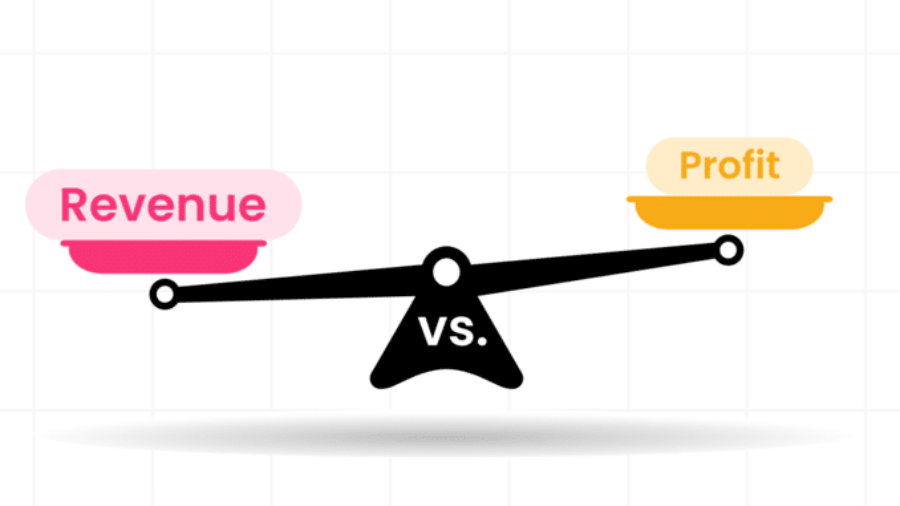
For many small and medium-sized enterprises (SMEs) and entrepreneurs, revenue is often seen as the primary indicator of success. However, high revenue does not necessarily equate to a healthy or sustainable business. Profitability, the measure of how much money a business actually retains after covering expenses, is a more accurate indicator of financial health. This article explores the key differences between revenue and profitability, their importance in decision-making, and strategies for SMEs to prioritize profitability over top-line revenue.
The Key Differences: Revenue vs. Profitability
Revenue
Revenue is the total income generated from business operations before any expenses are deducted. It reflects sales performance but does not account for costs associated with production, operations, or taxes. A business can have high revenue but still struggle financially if its expenses outweigh its earnings.
Profitability
Profitability is the actual earnings remaining after deducting all operational costs, taxes, and other expenses from revenue. There are different types of profit measures:
Gross Profit: Revenue minus the cost of goods sold (COGS).
Operating Profit: Gross profit minus operating expenses.
Net Profit: The final amount after deducting taxes, interest, and other costs.
Why SMEs Should Focus on Profitability
Sustainability and Growth
Profitability ensures that a business can reinvest in itself, scale operations, and withstand economic downturns. According to a study by the Small Business Administration (SBA), about 50% of small businesses fail within five years, often due to poor cash flow management and lack of profitability.
Investor and Lender Appeal
Investors and lenders prioritize profitability over revenue when evaluating a business’s long-term viability. High revenue with minimal or no profit is a red flag indicating inefficiency or unsustainable costs.
Operational Efficiency
A focus on profitability encourages businesses to streamline operations, control costs, and optimize pricing strategies. A report by Deloitte highlights that SMEs that track profitability metrics are 30% more likely to achieve long-term success than those that focus solely on revenue.
Strategies to Improve Profitability for SMEs
Cost Management
Reduce unnecessary expenses and renegotiate supplier contracts.
Automate processes to improve efficiency.
Pricing Strategy Optimization
Avoid underpricing products or services to increase sales volume.
Implement value-based pricing strategies that reflect the true value offered to customers.
Diversification of Income Streams
Explore additional revenue sources such as complementary services or products.
Consider subscription models or retainer-based services for consistent income.
Customer Retention and Loyalty
Retaining existing customers is more cost-effective than acquiring new ones.
Invest in customer satisfaction initiatives and loyalty programs.
Visual Representation
To further illustrate the differences and impact of revenue vs. profitability, see the following graphs:
Here is the line graph comparing an SME’s revenue and profit margins over five years. The blue line represents revenue, while the red dashed line represents profit margin.
Here is the pie chart showing the breakdown of business costs. Each segment represents a typical expense category that impacts profitability.
Here is the bar chart comparing the survival rates of profitable vs. non-profitable SMEs over five years. The blue bars represent profitable SMEs, while the red bars represent non-profitable ones.
Conclusion
For SMEs and entrepreneurs, profitability is the real measure of success—not just revenue. While high sales figures may look impressive, sustainable growth, operational efficiency, and financial stability are the true indicators of a thriving business. By focusing on cost control, pricing strategies, income diversification, and customer retention, SMEs can build a resilient and profitable enterprise.
Would you like us to assist with implementing profitability strategies in your SME? Contact us today!